







Vitamin A (retinol) was discovered over a century ago as a key dietary nutrient for mammalian health, and especially for the health of our eyes. (Hence the word retinol, named after our retina!)
In subsequent years its mechanism and functionality, and that of its precursors and metabolites — such as beta-carotene, retinaldehyde, and retinoic acid — have been elucidated, and the acid form was found to be the most active version in the body. In the world of skin health, all-trans retinoic acid, tretinoin, became an important prescription skin medication for treating acne and UV damage, and topical retinol became widely used in cosmetic skincare.
It was not until 1987 that scientists discovered the receptor that interacts with retinoic acid, and termed it the retinoic acid receptor, or RAR. From this discovery we learned how RARs trigger gene expression and cell differentiation and other biological process. Several variants of RARs have since been uncovered: RAR-alpha, RAR-beta, and RAR-gamma. And inn recent decades scientists have screened for other molecules, non-Vitamin A molecules, to see whether selective targeting of these receptors can improve skin health
New molecules that have been synthesized that powerfully target RARs, and these actives along with Vitamin A are now called retinoids. The modern synthetic retinoids such as adapalene, tazarotene, and trifarotene were designed specifically for selective receptor activity, enhanced stability, and improved tolerability without relying on the traditional Vitamin A chemical structure.
So what is a retinoid today? It is any kind of molecule that binds to the body’s retinoic acid receptors. While retinol, retinaldehyde, and retinoic acid are familiar first-generation Vitamin A retinoids, a true retinoid is not limited to Vitamin A ingredients, nor does it require the “retin-” root in its name.
| Category | Examples | Key Point |
|---|---|---|
| First-generation Vitamin A retinoids | Retinol, retinaldehyde, tretinoin | Familiar “retin-” ingredients |
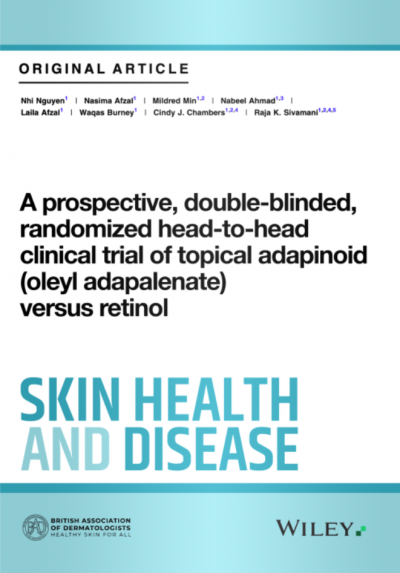
| Third-generation synthetic retinoids | Adapalene, tazarotene, Adapinoid® (Oleyl Adapalenate) |
Receptor-selective, not traditional retinol |
| Fourth-generation synthetic retinoids | Trifarotene, Trifarotol® (Trifarotenyl Caprylate) |
RAR-γ focused |
| Retinol alternatives | Bakuchiol, peptides, azelaic acid | May mimic benefits but are not necessarily retinoids |
Retinoid vs Retinol
The most common formulation misconception is using the words “retinoid” and “retinol” interchangeably. Retinol is merely one specific molecule—a first-generation Vitamin A derivative. “Retinoid” is the umbrella term for any compound that interacts with the skin’s retinoid receptors. By moving beyond basic retinol, formulators can utilize advanced retinoids that bypass the typical irritation and instability associated with traditional Vitamin A.
For a deeper explanation, see: Retinol vs Retinoids Explained
Are All Retinoids Vitamin A
No. While early retinoids were derived from Vitamin A, cosmetic and dermatological chemistry has evolved. Decades of research proved that the skin only cares about whether a molecule fits into the retinoic acid receptor “lock.” Molecules engineered to fit this lock perfectly—without being derived from Vitamin A—are still scientifically classified as retinoids. This is a crucial distinction for formulators navigating strict global Vitamin A regulatory limits.
For more on this history and definition, see: Why Some Retinoids Do Not Have “Retin” in Their Name
Retinoid Generations Explained
Retinoids are categorized by generation based on their molecular structure and receptor selectivity. First-generation retinoids (like retinol) bind broadly to multiple receptors, which can trigger inflammatory pathways. Third-generation retinoids, inspired by adapalene, target specific receptors (RAR-β and RAR-γ) for focused skin renewal. Fourth-generation retinoids, inspired by trifarotene, are highly selective for the RAR-γ receptor, the most abundant receptor in the epidermis.
For a complete breakdown of synthetic receptor-selective retinoids, see: Retinoid Generations: First, Second, Third, and Fourth Generation Retinoids
Cosmetic Retinoids vs Prescription Retinoids
Historically, highly targeted third and fourth-generation retinoids were exclusive to prescription dermatology. However, the development of cosmetic ester prodrugs has bridged this gap. By utilizing esterified versions of these molecules, non-prescription skincare brands can legally formulate with next-generation retinoid technology while remaining compliant with global cosmetic standards.
For regulatory guidance on what brands can use, see: Cosmetic Retinoids vs Prescription Retinoids: What Brands Can Use
Next-Generation Cosmetic Retinoids
The future of non-prescription skincare relies on smart delivery. Ingredients like Adapinoid® (a third-generation cosmetic prodrug) and Trifarotol® (a fourth-generation cosmetic prodrug) utilize the skin’s natural esterase enzymes to activate. This slow, controlled conversion provides the efficacy of advanced retinoids with a dramatically lower irritation profile compared to raw, unencapsulated retinol.
For more on how these molecules convert in the skin, see: Retinoid Prodrugs in Skincare: How Skin Enzymes Activate Next-Generation Actives