







One of the greatest innovations in modern cosmetic chemistry is the development of the prodrug. When dealing with highly potent retinoids, applying the raw, active molecule directly to the skin often results in severe irritation, barrier damage, and formulation instability. Prodrug technology solves this by utilizing the skin’s own biology as a slow-release delivery system.
What is a Prodrug?
In pharmacology and cosmetic science, a prodrug is a biologically inactive compound that can be metabolized within the body to produce an active molecule.
In the context of skincare, a retinoid prodrug is created by attaching an “ester group” (like an oleyl or caprylate chain) to an active retinoid backbone. This ester acts as a protective shield. While in the jar, the molecule remains totally dormant and highly stable, resisting oxidation and light degradation.
For more on how retinoids are scientifically defined, read: What Is a Retinoid? Retinol vs Retinoids Explained
The Role of Skin Esterases
The magic of a retinoid prodrug happens upon application. The human skin is rich in naturally occurring enzymes called esterases.
When a prodrug is applied to the skin, these esterase enzymes recognize the ester bond and begin to slowly cleave (cut) it away. As the ester is removed, the active retinoid molecule is released into the skin.
- Controlled Release: Because the enzymes take time to break down the ester bonds, the retinoid is delivered in a slow, sustained “drip-feed.” This prevents the skin’s receptors from being overwhelmed all at once, which is the primary cause of retinoid dermatitis (dryness and peeling).
- Targeted Activation: The active molecule only becomes available exactly where it is needed—within the skin—ensuring maximum efficacy and minimal surface irritation.
Actera’s Next-Generation Prodrugs
Actera Ingredients has pioneered the use of cosmetic ester prodrugs to bring advanced, non-Vitamin A retinoid technology to the non-prescription market.
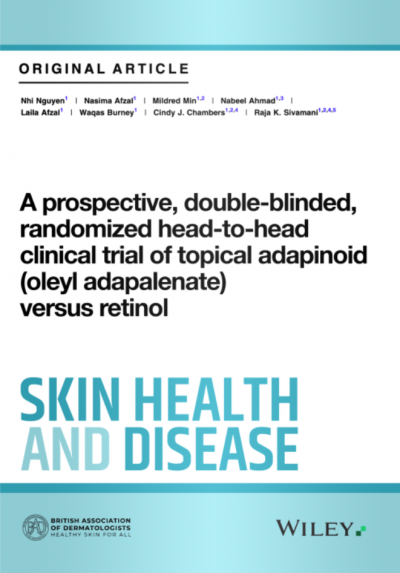
- Adapinoid®: By attaching an oleyl group to an adapalene precursor, we created Oleyl Adapalenate. The skin’s esterases slowly convert this prodrug, delivering third-generation RAR-β and RAR-γ targeted benefits.
- Trifarotol®: By attaching a caprylate group to a trifarotene precursor, we created Trifarotenyl Caprylate. This prodrug allows esterases to facilitate fourth-generation, ultra-selective RAR-γ activation.
By shifting from raw retinol to intelligent prodrugs, formulators can create high-performance anti-aging products that respect the skin barrier and deliver unparalleled, long-term visible results.