







The evolution of retinoids is a story of increasing precision. While the beauty industry often groups all cell-communicating actives under the umbrella of “retinol,” science categorizes retinoids into distinct generations. Each generation represents a leap forward in molecular engineering, moving from broad, unstable compounds to highly targeted, receptor-specific molecules.
Need a quick refresher on what a retinoid actually is? Start here: What Is a Retinoid? Retinol vs. Retinoids Explained
First-Generation Retinoids: The Vitamin A Family
First-generation retinoids are the naturally occurring derivatives of Vitamin A. This category includes retinol, retinaldehyde (retinal), and tretinoin (retinoic acid).
- Mechanism: They bind broadly to all three retinoic acid receptors in the skin (RAR-α, RAR-β, RAR-γ).
- Pros: Highly studied with decades of clinical data backing their efficacy for anti-aging and acne.
- Cons: Their broad-spectrum binding is notorious for triggering the “retinol uglies”—dryness, erythema, and peeling. Additionally, they are highly unstable in formulations and subject to strict global regulatory caps (such as the recent EU Vitamin A restrictions).
Second-Generation Retinoids: Systemic Therapies
Second-generation retinoids, such as etretinate and acitretin, are synthetic compounds developed primarily for severe dermatological conditions like psoriasis. They are typically administered orally as prescription systemic drugs and are not utilized in topical cosmetic skincare formulations.
Third-Generation Retinoids: The Shift to Selectivity
The third generation marked a massive breakthrough in topical dermatology. Molecules like adapalene and tazarotene were synthesized from the ground up—meaning they do not rely on the volatile Vitamin A structure.
- Mechanism: They are selectively engineered to bind primarily to RAR-β and RAR-γ receptors, bypassing RAR-α.
- Pros: By targeting only the receptors responsible for cellular turnover and ignoring the ones that trigger excess inflammation, third-generation retinoids offer robust efficacy with vastly improved tolerability and photostability.
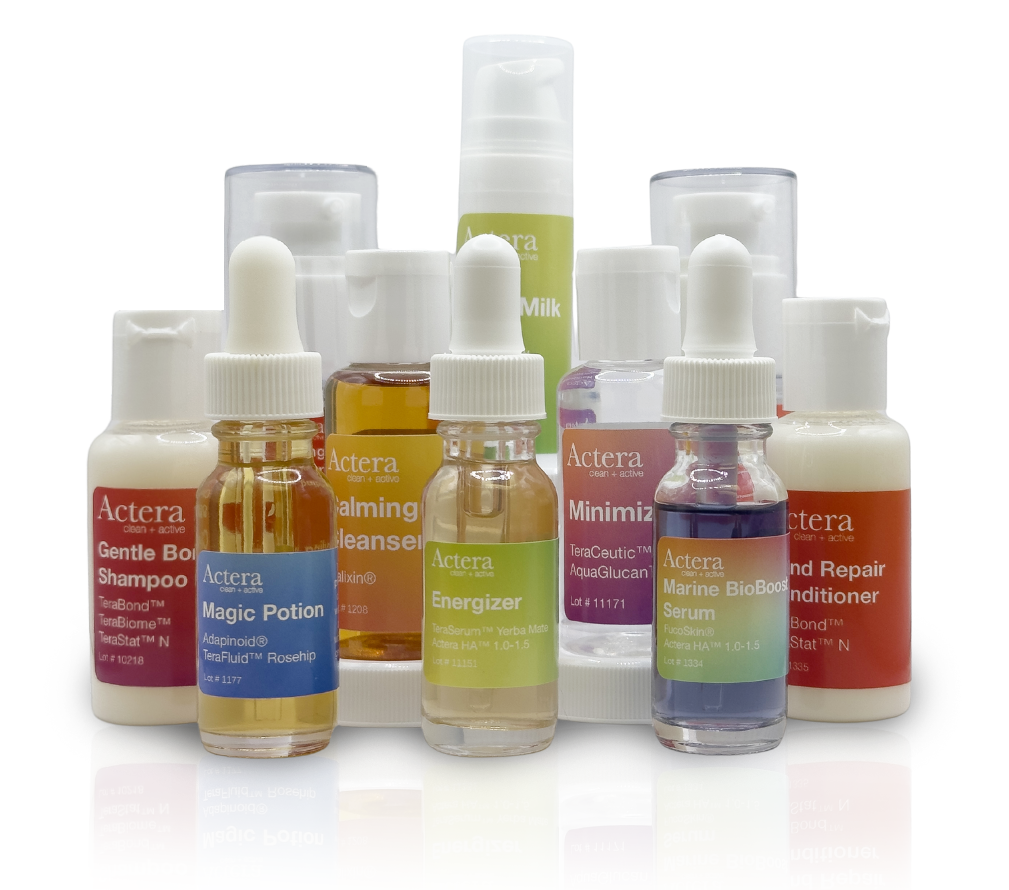
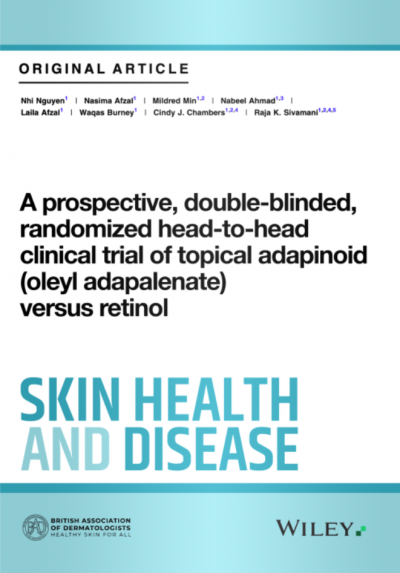
- Cosmetic Innovation: Historically prescription-only, Actera offers Adapinoid® (Oleyl Adapalenate), a non-prescription prodrug that allows formulators to harness third-generation adapalene technology in over-the-counter cosmetics.
Fourth-Generation Retinoids: Ultimate Precision
The most recent advancement in retinoid technology is the fourth generation, defined by extreme receptor selectivity. The benchmark molecule of this class is trifarotene.
- Mechanism: Fourth-generation retinoids exclusively target RAR-γ, which is the most abundant retinoic acid receptor found in human epidermis (making up over 90% of the skin’s RARs).
- Pros: This hyper-targeted approach means the molecule only activates the specific pathways required for skin smoothing and clarity, resulting in an unprecedented balance of high-potency renewal and low irritation.
- Cosmetic Innovation: Actera’s Trifarotol® (Trifarotenyl Caprylate) acts as a cosmetic precursor to this fourth-generation pathway, offering brands the ability to formulate with the most advanced retinoid science available today.